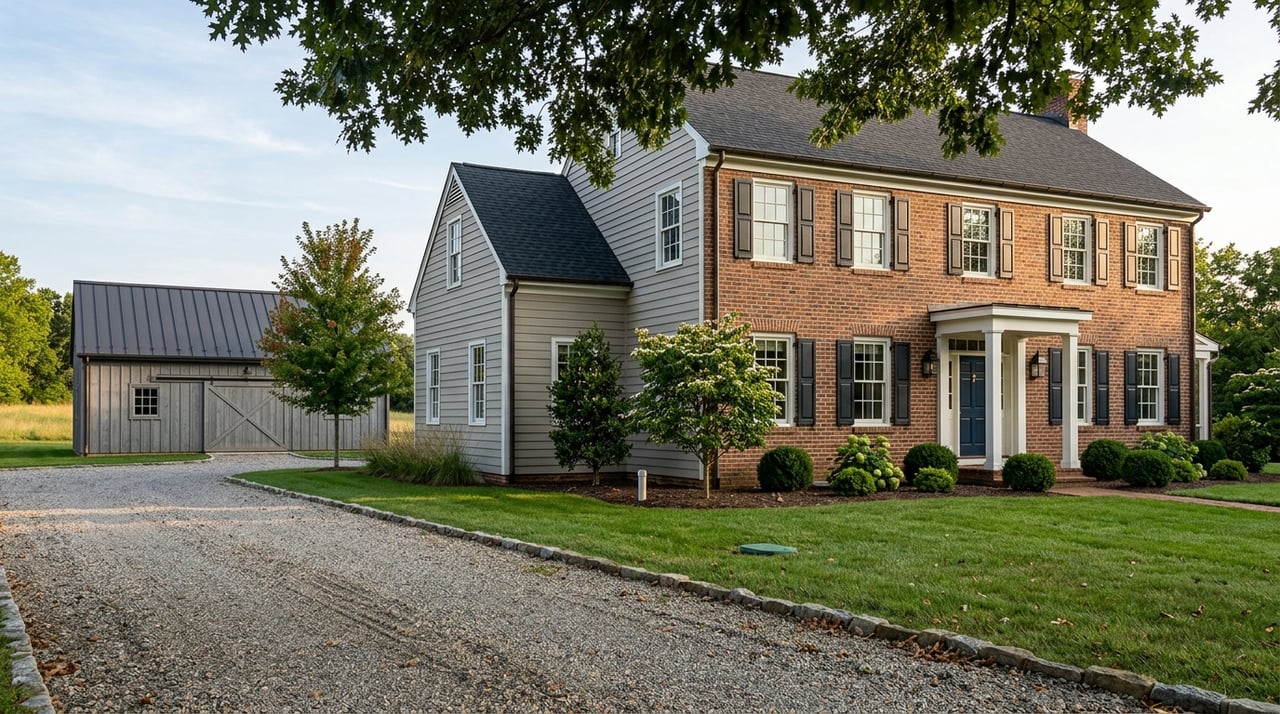
Thinking about trading a typical suburban lot for open land and a country home near Barnesville? It can be an exciting move, but rural property comes with a different set of questions than a standard home search. If you want more space, privacy, and a setting shaped by farmland and scenic roads, this guide will help you focus on what matters most before you buy. Let’s dive in.
Why Barnesville Feels Different
Barnesville is a small incorporated town in western Montgomery County with a 2020 census population of 144. It sits within Montgomery County’s Agricultural Reserve, a 93,000-acre rural area created to protect farmland and open space.
That rural setting shapes the experience of owning property here. Montgomery Planning describes the area as a working landscape, not a suburban fringe, with farms, open space, bike routes, scenic vistas, and small crossroads communities. If you are considering acreage in Barnesville, you are buying into that larger land-use framework as much as you are buying a house.
Barnesville Road is also identified as a rustic road that passes through farmland and Barnesville with views of Sugarloaf Mountain. In practical terms, that gives you a strong picture of daily life: scenic, spread out, and more closely tied to land and roads than to dense retail or suburban development patterns.
Start With Zoning First
When you buy acreage, lot size alone does not tell the full story. The first question is how the parcel is zoned and whether any preservation restrictions affect what you can do with the property.
Montgomery Planning says the Agricultural Reserve includes several zoning categories that matter to buyers. In the Agricultural Reserve, or AR, zone, agriculture and related uses are preferred, and residential development is limited to one dwelling unit per 25 acres. In the Rural, or R, zone, residential development is limited to one dwelling unit per 5 acres.
There is also the Rural Cluster, or RC, zone, where farmland, open space, and low-density housing can mix, with lots as small as one acre. That means two properties with a similar look and similar acreage may have very different long-term use or development options.
Why zoning matters to your plans
If you are hoping to buy land for a custom home, a future addition, or long-term flexibility, zoning needs to be reviewed early. A parcel may look large enough for your goals, but the zoning district may limit how many homes can exist on it or how the land can be used.
This is especially important if you are comparing Barnesville to more suburban parts of Montgomery County. In a rural area, the rules are designed to preserve farmland and open space, so the property’s legal framework carries more weight in your decision-making.
Check Whether the Property Is In Town Limits
Another key question is whether the property is inside Barnesville town limits or in unincorporated county land. That distinction matters because Barnesville has its own planning and land-use powers as a municipality.
According to the town, Barnesville regulates land use through its zoning, subdivision, and forest conservation ordinances. Depending on the parcel location, you may be dealing with town rules, county rules, or both.
What this means for buyers
Before you assume a future project will be straightforward, confirm which jurisdiction applies. A home near Barnesville may have a Barnesville mailing address or local identity, but the actual regulatory path can differ based on whether it sits within town boundaries.
That can affect your timeline, due diligence, and expectations for future improvements. It is one of the first details worth verifying when you begin looking at country homes in this area.
Understand TDR and BLT Restrictions
Some Barnesville-area properties may also be affected by transferable development rights, known as TDRs, or BLT easements. These are not minor technical details. They can directly affect future development potential.
Montgomery Planning explains that the county’s TDR program helps preserve farmland by shifting development away from agricultural land. The county also notes that BLT easements restrict residential, commercial, industrial, and other non-agricultural uses on the burdened land.
The practical takeaway
If future buildability matters to you, verify early whether the land still has full development rights or whether some rights have already been transferred or retired. This step can help you avoid buying a property based on assumptions that do not match the land’s actual status.
For many buyers, this is one of the biggest differences between buying acreage and buying a typical neighborhood home. The value is not just in the house itself. It is also in the rights attached to the land.
Think Beyond The House
Many buyers looking at country homes want more than just the main residence. You may be thinking about a detached garage, shed, barn, pool house, gazebo, workshop, or extra storage.
In Montgomery County, accessory structures on residential lots generally require permits before they are constructed or modified. The county says accessory structures include detached garages, sheds, barns, gazebos, pool houses, portable storage, and sea containers. The county also states that sheds require both a building permit and zoning review.
Rear-yard and utility considerations
The county says accessory structures on residential lots must be in the rear yard. It also notes that properties with individual well and septic systems have additional requirements.
This matters because a large rural lot does not automatically mean you can place an outbuilding anywhere you want. The location of the house, septic area, well, and setbacks can all shape what is realistic.
Private restrictions may still apply
County approval is only part of the picture. Montgomery County states that many subdivisions have private deed restrictions and covenants that the county does not enforce.
So if you are counting on adding a fence, workshop, barn, or storage structure, review both government requirements and any private documents tied to the property. That extra step can save time and frustration later.
Agricultural Buildings Are Treated Differently
There is also an important difference between a residential accessory structure and a true agricultural building. Montgomery County’s Office of Agriculture says a building used exclusively for agricultural purposes on land used exclusively for agriculture can be exempt from a county building permit.
That said, the building is still subject to erosion and stormwater oversight and still needs any required electric, well, or septic permits. In other words, an agricultural building may be treated differently, but it is not outside the rules.
Why buyers should ask early
If you are considering a farm-style property, ask how existing buildings are classified and what future intended use would mean. A barn used as part of agricultural activity may be treated differently than a barn or outbuilding used as a residential accessory structure.
That distinction can influence both your plans and your costs after closing.
Wells And Septic Are Core Due Diligence Items
For many suburban buyers, private utilities are the biggest adjustment. County DEP says areas served by onsite water supply wells tend toward the western and northern parts of Montgomery County, which makes this especially relevant in and around Barnesville.
The county explains that the ability of a private well and septic system to provide service depends on the soil and rock conditions under the property and on how well the systems are maintained. That means these systems are not just background features. They are central to the property’s function and long-term usability.
Why they matter before closing
Montgomery County DPS, acting on behalf of the Maryland Department of the Environment, handles well and septic testing and permitting in the county. The county says a well permit is required to make sure a well meets current county and state standards, and flow testing is required before a building permit is issued for a new well.
For a new home or major addition, county submittal requirements can include existing well and septic locations, the approved septic reserve area, and any approved future well sites. That is why well and septic information should be part of your early review, not something left for the end of the process.
Check Water And Sewer Service Area Status
Another smart step is to review the property’s water and sewer service area category. Montgomery County says some properties are planned for public water and sewer service, while others are intended to remain on private onsite systems.
The county also notes that owners may be expected to pursue public service if an onsite system fails or if redevelopment is proposed. For acreage buyers, this adds another layer to understanding both current living conditions and future options.
Why this affects long-term planning
If you are used to homes with public utilities, service-area status may not be on your normal checklist. In Barnesville and nearby rural areas, it should be.
A property’s service category can shape renovation decisions, replacement planning, and how you think about the home over time. It is one more reason rural purchases benefit from careful, front-loaded due diligence.
What Daily Life In Barnesville Can Look Like
Barnesville is best understood as a rural, landscape-oriented part of Montgomery County. Montgomery Planning emphasizes farms, open space, bike routes, and scenic vistas, and the Rustic Roads Program helps preserve roads that reflect the county’s agricultural character and rural origins.
For you, that can mean a setting with more privacy, more open land, and a stronger connection to the surrounding landscape. It can also mean a lifestyle that is more car-based and more influenced by road conditions, land stewardship, and private utility systems than what many buyers experience in suburban neighborhoods.
A Smart Framework For Buying Acreage
If you are serious about buying acreage or a country home in Barnesville, it helps to think in three layers.
First, review the parcel’s zoning and preservation status. Second, confirm what outbuildings, additions, or other improvements are actually allowed. Third, understand whether the home relies on a private well and septic system and how that affects both day-to-day living and future plans.
Those three questions can tell you more about a Barnesville property than square footage alone. When you approach a rural purchase with clear due diligence from the start, you are far more likely to make a confident and informed decision.
If you are weighing country homes, larger lots, or estate-style properties in Montgomery County, a steady local perspective can make the process much clearer. With more than 40 years of residential real estate experience in the region, Gary Floyd offers the kind of measured guidance that helps you evaluate not just the home, but the land, rules, and long-term fit behind it.
FAQs
What makes buying acreage in Barnesville different from buying a suburban home?
- Barnesville properties are shaped by rural zoning, preservation rules, and private well or septic considerations, so buyers need to evaluate land use and utility details along with the house itself.
What zoning should buyers check for Barnesville country homes?
- Buyers should confirm whether a property is in the AR, R, or RC zone and review how that zoning affects residential density, land use, and future flexibility.
What should buyers know about outbuildings on Barnesville-area properties?
- Montgomery County generally requires permits and zoning review for many residential accessory structures, and buyers should also check for any private deed restrictions or covenants.
What should buyers know about wells and septic in Barnesville?
- In this part of western Montgomery County, private well and septic systems can be a major part of the property’s buildability and daily function, so buyers should review their status early.
Why do TDR or BLT restrictions matter for Barnesville land buyers?
- These preservation tools can affect future development rights and may limit non-agricultural uses, so they are important to verify before you rely on assumptions about buildability.