In the week ending December 14, 2025, sellers in Fairfax County put 113 homes on the market and buyers signed 205 purchase contracts, according to Bright MLS's weekly D.C.-area tracker. That gap is why December has a quiet reputation as a good month to sell here. Sellers pull back for the holidays faster than buyers do, so the few homes that do come out get the attention.
This year the season begins differently. In the week ending November 8, 2026, Fairfax County had 204 new listings against 175 new contracts, and 2,095 homes were already sitting on the market, up from 1,500 the same week a year earlier. The December edge depended on new supply thinning out. When the market already holds that much unsold inventory, the edge is likely to hold only for homes that don't look like the backlog.
How last December's edge worked
Bright tracked the D.C. region week by week through late 2025, and the Fairfax County rows show the same pattern every week. In the week ending November 23, 2025, the county had 161 new listings and 239 new pending contracts. In the week ending December 7, it had 160 new listings and 194 pending contracts. By mid-December, new listings had dropped to 113 while contracts held at 205.
Buyer demand did not grow over those weeks. Showings in the December 14 week were 3,001, below the 4,058 recorded in late November. The ratio favored sellers because new listings fell faster than buyers dropped out. That works when buyers have already bought or passed on most of the homes listed in the fall. It works less well when the fall inventory is still on the market.
| Fairfax County, single week | New listings | New contracts | Share of actives with a price drop |
|---|---|---|---|
| Week ending Nov. 23, 2025 | 161 | 239 | 8.5% |
| Week ending Dec. 7, 2025 | 160 | 194 | 9.8% |
| Week ending Dec. 14, 2025 | 113 | 205 | 7.4% |
| Week ending Nov. 8, 2026 | 204 | 175 | 9.8% |
Bright stopped producing the dedicated D.C. tracker in December 2025, saying federal government layoffs had slowed. The current Fairfax County figures come from Bright's broader Weekly Market Report, which lists each county beside its year-ago and prior-week numbers.
The November 2026 starting point
The week ending November 8, 2026 shows a different pace. A year earlier, that same week was roughly even, with 198 new listings and 200 new contracts. This year, new listings ran ahead of contracts and the stock of unsold homes was about 40 percent larger. Showings that week totaled 3,126, compared with 3,586 a year before. Dividing showings by active listings gives about 1.5 showings per home on the market that week, down from about 2.4 in the same week of 2025.
Other numbers from that week point the same way. The median time to contract was 42 days, compared with 31 a year earlier. Canceled listings came to 31, up from 16. The share of active listings with a price reduction was 9.8%, up from 8.4% in the same week of 2025. Last year, Fairfax County did not reach a 9.8% share until the week ending December 7, about four weeks later in the season.
The monthly numbers match. Bright's October 2026 report counted 810 closed sales in Fairfax County for the month, down 21.7% from October 2025. It also counted 808 new contracts, down 20.6%, and 2,301 active listings at month's end, up 33.5%. Supply stood at 2.37 months, 0.6 months higher than a year earlier. The October figures are preliminary and subject to revision.
Two clocks running at once
One October figure seems to contradict all of this. The median days on market for Fairfax County homes that closed in October was 13, unchanged from a year earlier, and the October median sale price of $739,450 was down only 0.7%.
The two measures count different homes. The 13 days covers homes that sold, and half of them went under contract within about two weeks. The 42 days is the median for contracts signed in the week ending November 8, and that group includes homes that sat through the fall before a buyer agreed to terms. Read together, they describe one market moving at two speeds. Listings that match what buyers want at the asking price still sell about as fast as they did in 2025. The ones that miss join a line of unsold homes that grew by several hundred listings this fall.
That is why December may favor some sellers and not others. The holiday drop in new listings still happens, but it now removes new homes from a pile that is already large. A buyer shopping in mid-December 2026 is choosing among the fall's unsold homes, not just the handful listed that week.
Where the backlog sits
The regional data shows which homes make up most of that backlog. The Northern Virginia Association of Realtors reported in its September 2026 release that active listings across its coverage area rose 30.7% from a year earlier. Condo and townhome inventory rose 49.7%, while detached-home inventory rose only 5.7%. NVAR's area includes Fairfax County along with Arlington, Alexandria, Fairfax City, Falls Church, Vienna, Herndon and Clifton, so the split is regional rather than a Fairfax-only count.
Fairfax County prices for September follow the same split. FFXnow reported that the average single-family sale price was $1,220,641, up 2% from a year earlier. Attached homes averaged $569,805, down 0.8%, and condos alone averaged $421,643, down 10.3%. Across the D.C. metro in October, Bright put the median detached price at $826,000, up 2%, and the median condo price at $375,000, down 5.1%.
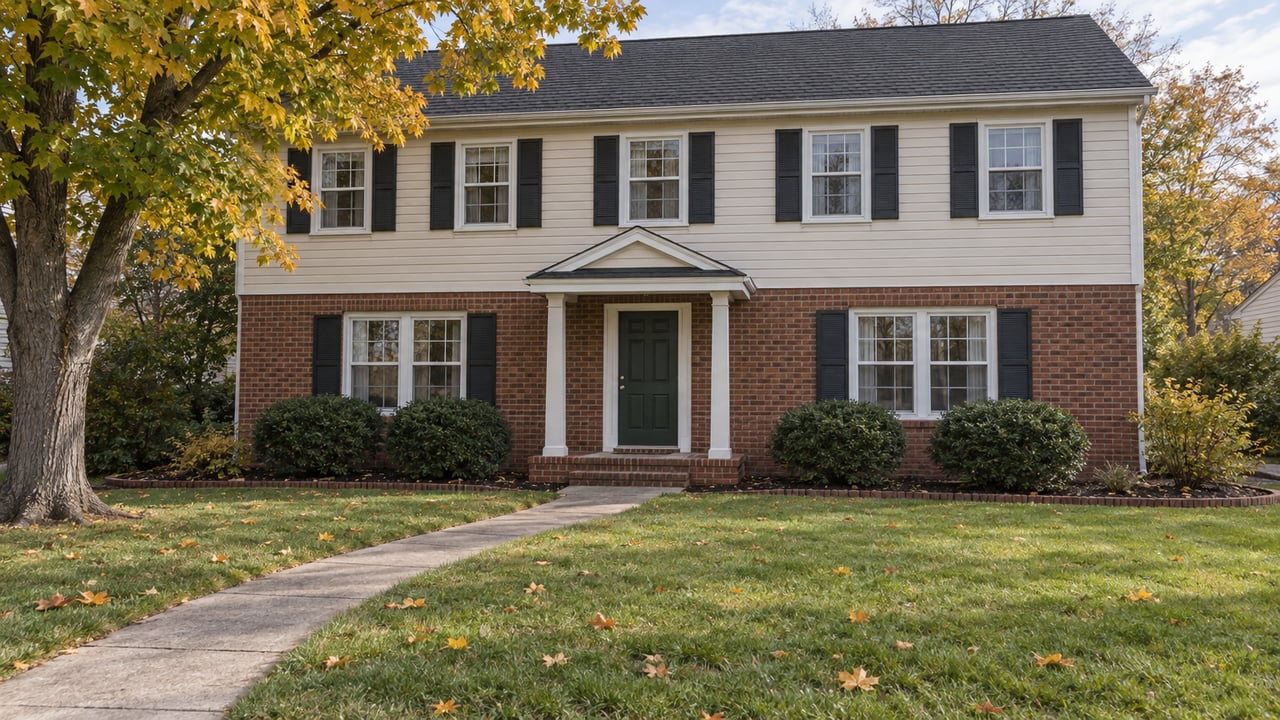
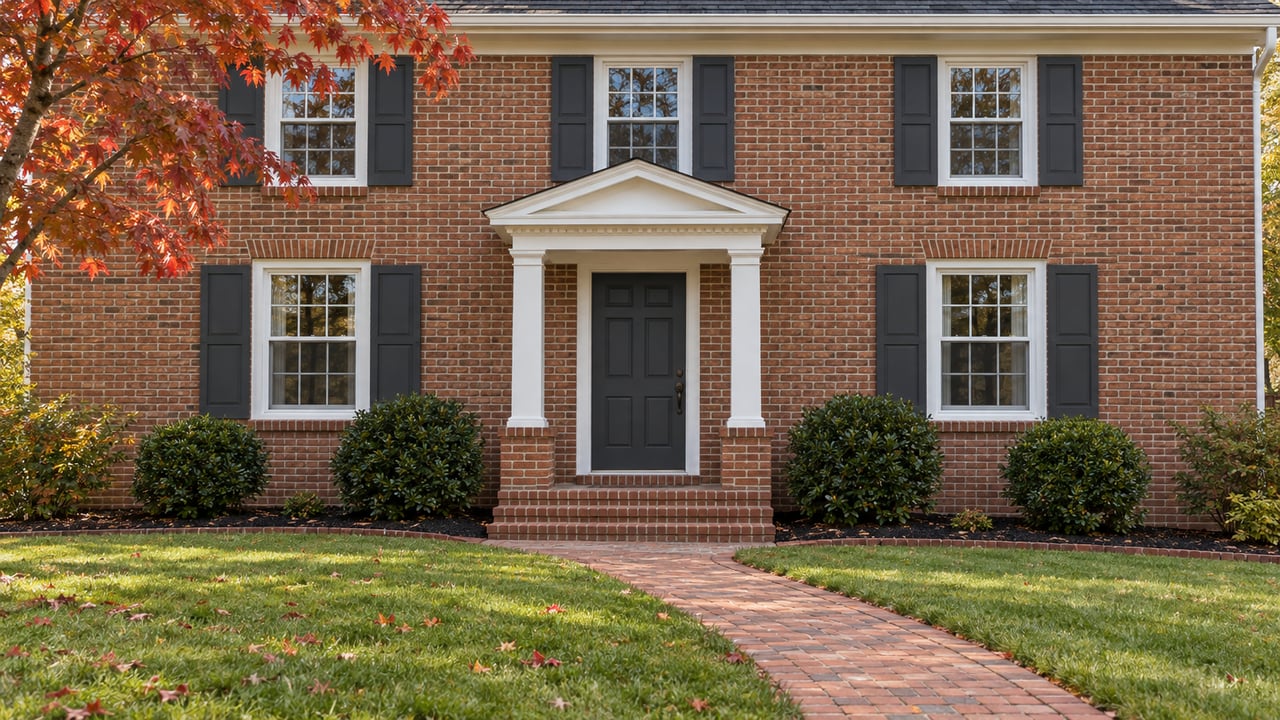
For a seller deciding about December, the property type matters as much as the county totals. The owner of a detached colonial in Fairfax County is listing into a segment where supply grew slowly, so the familiar December pattern of few new listings and steady buyers is still likely to apply. The owner of a condo or townhouse would be listing among a much larger group of similar homes, in the segment where regional inventory grew fastest this fall.
What waiting for spring involves
Rates explain most of the slowdown, according to the economists who track this market. Bright's Nov. 10 release said mortgage rates above 7% were holding buyers back, especially first-time and moderate-income buyers. In September, Bright chief economist Lisa Sturtevant told FFXnow that "it is higher rates, and not federal government cuts, that is quelling the D.C. area housing market."
Her outlook for the end of the year, reported by FFXnow on Nov. 12, was that the region would stay sluggish "as many prospective homebuyers and sellers hold out for better conditions in 2027." She added that buyers still in the market would have more bargaining power, with sellers more likely to cut prices and offer concessions in the last two months of the year. Fairfax County sales had been running 2.1% ahead of 2025 through August. After the September and October declines, the county could finish the year behind.
Real estate agents across the state expected the same. In the Virginia Realtors flash survey taken Sept. 23 to 30, 44% of responding members expected prices in their area to be lower at year-end than in late September. The group's Buyer Activity Index fell to 24 on a 100-point scale, its lowest reading of the year, down from a 2026 peak of 55 in April.
Waiting for spring has a cost too. The sellers Sturtevant describes holding out for 2027 are the same sellers who will list in the spring, so a Fairfax County owner who waits for March will be listing alongside them. That decision depends on whether your home belongs to the part of the market that is backed up or the part that is still moving.
Checking where your home stands
The county averages blend both parts of the market. A seller deciding before the new year can get a clearer answer from the homes that compete most directly with theirs.
- Compare new listings with new contracts for your property type and price band in your part of the county over the past four to six weeks. The county is running at about 0.86 contracts per new listing, and your segment may be well above or below that.
- Count how many comparable homes are still active after 45 days, and how many of them have cut their price. Those homes are what a December buyer will compare yours to.
- Price against recent closed sales, not against listings that are still sitting. The homes that closed in October went under contract in a median of 13 days, which means they were priced where buyers would act.
- Decide on the price and condition before the listing goes live. With price cuts at 9.8% of active listings and rising, a reduced price in late December looks like a home that sat through the fall.
If your home is detached and well kept, and you can show it during the holidays, the thin December pipeline still works in your favor. If your home is a condo or townhouse, the decision rests on how many similar units are already on the market near you, and Bright's weekly county figures will tell you more about that than the seasonal pattern will.
With more than 40 years in residential real estate across the DMV, Gary can walk through the homes competing with yours and help you decide whether to list in December or wait for spring. Start with a home valuation, see how Gary works with sellers, or browse his Fairfax County neighborhood guide. When you're ready, Gary Floyd is glad to talk it through. Let's Connect.